National Depression and Mental Health Screening Month: You Don’t Have to Suffer in Silence
Depression doesn’t always look the way people expect. Screening can be the first step toward real relief and recovery.
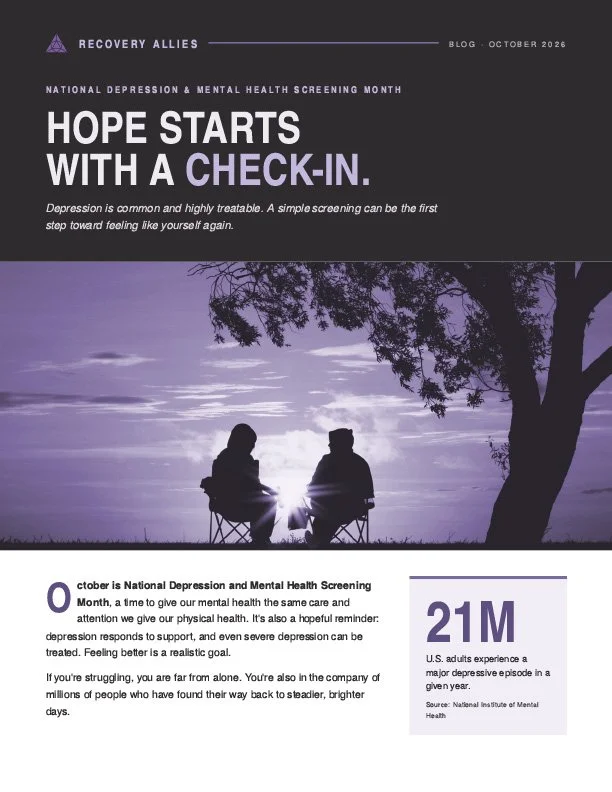
October is National Depression and Mental Health Screening Month—a time dedicated to raising awareness, encouraging depression screening, and reminding people that mental health deserves the same attention as physical health. Depression, anxiety, and other mental health conditions affect millions of Americans, yet many continue to struggle without support.
According to national data, more than 21 million U.S. adults experience a major depressive episode in a given year. That number does not include the many people who remain undiagnosed and untreated. Behind every statistic is a person who may be quietly suffering.
What Depression Can Look Like
Depression does not appear the same in everyone. For some, it shows up as persistent sadness, emptiness, or hopelessness. For others, it can look like irritability, numbness, exhaustion, or loss of interest in things that once mattered. Changes in sleep, appetite, concentration, and energy are common. In its more severe forms, depression can be deeply debilitating—making it difficult to work, maintain relationships, or even get out of bed.
Mental health issues are highly individual. Two people with depression may have completely different symptoms, triggers, and needs. Factors such as trauma history, co-occurring anxiety, substance use, medical conditions, personality, and life circumstances all shape how depression manifests and what effective treatment and recovery look like.
Understanding Masking
In clinical terms, masking refers to the ways people consciously or unconsciously hide, suppress, or compensate for their symptoms in order to appear functional to the outside world. Someone living with depression may continue showing up to work, caring for others, and smiling in social situations while internally feeling overwhelmed, exhausted, or hopeless. Masking can delay recognition of the problem and postpone much-needed treatment and support. Over time, the effort required to keep masking can itself become draining and isolating.
Why Screening Matters
Depression screening is a simple but powerful tool. It is not a diagnosis—it is a starting point that can help identify when someone may benefit from further evaluation and care. Early recognition and treatment improve outcomes and can prevent symptoms from becoming more severe. No one should have to wait until they are in crisis to receive help. Screening opens the door to wellness, recovery, and effective treatment planning.
How Recovery Allies Can Help
At Recovery Allies, our team is trained to recognize the many ways depression and other mental health issues present—including when symptoms are being masked. We provide individualized treatment planning and case management designed to stabilize and support people where they are. Through compassionate, personalized care, we help individuals move from merely surviving toward greater stability, connection, and hope.
If you or someone you care about has been struggling with low mood, loss of interest, exhaustion, anxiety, or a sense that something is not right, consider taking the step of a depression screening. You do not have to figure this out alone.
Help is available. Healing is possible. And support can begin today.
Ready to take the next step toward support and recovery?
Visit recoveryallies.com