DBT Therapy for Borderline Personality Disorder: What It Is, How It Works, and Why It Delivers Life-Changing Results
If you or someone you love has been diagnosed with Borderline Personality Disorder (BPD), you’ve likely heard the term ‘DBT Therapy’ — but what exactly is it, and why do so many experts call it the gold-standard treatment for BPD?
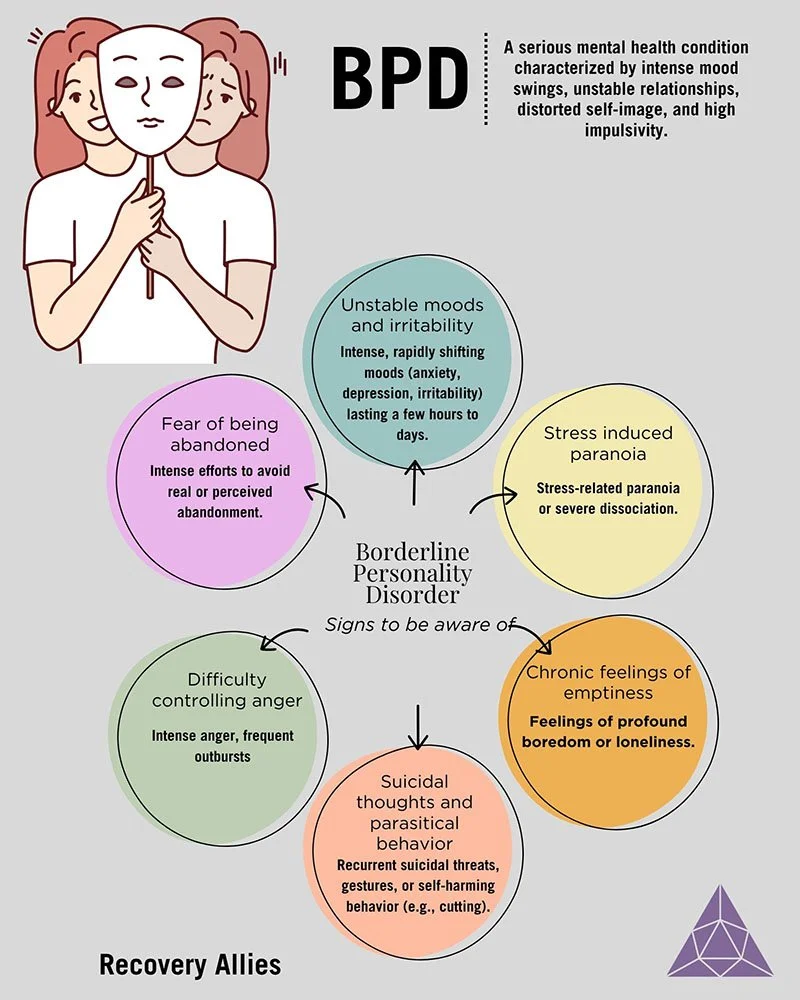
Borderline Personality Disorder is far more than “mood swings” or “being dramatic.” It is a serious mental health condition rooted in emotional dysregulation, intense fear of abandonment, unstable relationships, impulsivity, and a deeply painful sense of self. For many people with BPD, these symptoms stem from a history of trauma — childhood emotional neglect, abuse, invalidation, or complex PTSD. The good news? DBT (Dialectical Behavior Therapy) was literally created for BPD, and when paired with the right supportive services, it produces some of the strongest, most lasting outcomes in mental health treatment.
At Recovery Allies, we’ve seen countless individuals with personality disorders — especially BPD — achieve remarkable stability and healing when they combine DBT therapy with concierge Case Management, Mentoring, and Recovery Companion support. These services provide the structure, accountability, and coordination that turn DBT skills into real-life transformation.
What Exactly Is DBT Therapy?
Dialectical Behavior Therapy (DBT) is a structured, evidence-based form of cognitive-behavioral therapy developed in the 1980s by psychologist Dr. Marsha Linehan specifically to treat Borderline Personality Disorder. The word “dialectical” refers to the core philosophy: finding balance between two seemingly opposite truths — acceptance and change.
Unlike traditional talk therapy that may feel open-ended, DBT is skills-based and highly practical. It teaches concrete tools you can use in the moment when emotions feel overwhelming. Treatment typically includes:
- Individual DBT therapy sessions (once or twice weekly with a specially trained therapist)
- DBT skills training groups (weekly classes that teach the four core modules)
- Mentoring (check-ins with your Mentor for real-time skill use during crises)
- Therapist consultation team (to keep the treatment consistent and effective)
DBT is time-limited and structured — usually 6–12 months of intensive work — making it both effective and measurable.
The Four Core Modules of DBT — and Why They Work for BPD
DBT breaks recovery into four practical skill sets that directly target the core struggles of Borderline Personality Disorder:
1. Mindfulness
Learning to observe thoughts and feelings without judgment. For someone with BPD, this interrupts the automatic spiral of “I’m worthless” or “Everyone is going to leave me.”
2. Distress Tolerance
Healthy ways to survive intense emotional pain without making it worse (no self-harm, no impulsive decisions). Skills like TIPP (Temperature, Intense exercise, Paced breathing, Progressive relaxation) and radical acceptance give immediate relief.
3. Emotion Regulation
Understanding, naming, and changing intense emotions. People with BPD often describe emotions as a 10/10 tsunami; DBT teaches how to dial that intensity down and prevent emotional “all-or-nothing” thinking.
4. Interpersonal Effectiveness
How to ask for what you need, say no, and maintain relationships without pushing people away or losing yourself. This module directly addresses the fear of abandonment and unstable relationships that define BPD.
These modules work because they address both the biological vulnerability (heightened emotional sensitivity) and the environmental factors (often trauma and invalidation) that create BPD symptoms. Research shows that DBT reduces suicidal behavior, self-harm, hospitalizations, and substance use by 50–80% in many studies — results that are unmatched by most other therapies for BPD.
The Trauma Connection: Why DBT Is Especially Powerful
Many people with Borderline Personality Disorder have experienced significant trauma. Invalidating environments — where emotions were dismissed, punished, or ignored — teach the brain that feelings are dangerous. DBT is inherently trauma-informed. It validates the pain first (“Of course you feel this way given what you’ve been through”) while gently teaching new ways to cope. This combination of validation + skill-building is why DBT feels so different — and so effective — for trauma survivors with BPD.
Why DBT Alone Is Often Not Enough — The Power of Concierge Support
Even with the best DBT therapist, life outside the therapy office can derail progress. That’s where Recovery Allies’ specialized services make the difference between “trying DBT” and truly thriving with BPD.
Case Management for Borderline Personality Disorder
A dedicated Case Manager becomes your central coordinator. They ensure you’re matched with a highly skilled DBT therapist who truly understands personality disorders. They schedule appointments, communicate with psychiatrists for medication support, track progress across providers, and create a comprehensive treatment plan. When you’re in a vulnerable place — overwhelmed, scared, or unsure — your Case Manager handles the logistics so you can focus on healing. Recovery Allies clients with personality disorders consistently show stronger outcomes because nothing falls through the cracks.
Mentoring for Accountability and Life Skills
Our mentors provide daily contact, gentle accountability, and real-world practice of DBT skills. They help you build executive functioning, healthy routines, and social skills that BPD often disrupts. Many clients say their mentor feels like “the steady voice in my head” until the DBT skills become automatic.
Recovery Companion (Sober Companion) Support
For those with co-occurring substance use or who need extra structure during early recovery, a 24/7 Recovery Companion offers hands-on guidance. They can accompany you to DBT sessions or doctor appointments as an advocate, help you practice interpersonal effectiveness in real time, and provide the safety net that prevents impulsive decisions during emotional storms.
These concierge services are especially effective for personality disorders because they offer the consistent validation and structure that many people with BPD never received growing up. The result? Higher treatment completion rates, fewer crises, and lasting emotional stability.
Finding the Right DBT Therapist Matters — And Recovery Allies Makes It Easy
Not every therapist who says they “do DBT” is fully trained or adherent to the model. Recovery Allies has spent years building relationships with the best DBT providers across the country. Through our Treatment Planning service, we conduct a thorough assessment, review your history and trauma background, and match you with a DBT therapist who is not only highly credentialed but also a true fit for your personality, needs, and goals.
We then layer on Case Management, Mentoring, and Companion Support so that DBT doesn’t exist in isolation — it becomes part of a complete, personalized recovery ecosystem.
Real Hope for Borderline Personality Disorder
Borderline Personality Disorder is treatable. With the right DBT therapy, combined with trauma-informed care and the steady support of a Case Manager, Mentor, and Recovery Companion, people with BPD go from feeling chronically unstable to building meaningful relationships, holding jobs, and living with genuine emotional freedom.
Recovery Allies has been guiding individuals and families through personality disorders, trauma, and co-occurring conditions since 2011. Our team members are background-checked, trained, certified, and supervised. Many have lived experience. We believe in solutions that honor your dignity and your unique story.
Start the path to healing.
Recovery Allies — Guiding You Every Step of the Way.
If you or someone you love has been struggling with Borderline Personality Disorder, don’t wait for things to get worse. Reach out today for a free, confidential consultation. We’ll help you understand your options, connect you with the right DBT therapist, and build the full support team you deserve.
Contact us at:
📧 contact@recoveryallies.com
📞 206-295-8423
You’ve already survived so much. Now let us help you start truly living. Your healing journey — and a more stable, hopeful future — begins with one conversation. We’re ready when you are.