Interventions Are Not What You Think They Are: The Compassionate Truth Behind Modern Recovery Interventions
You’ve probably seen the dramatic TV versions: a room full of angry family members, harsh accusations, tears, and an ultimatum that forces someone into treatment. The person storms out, the family feels defeated, and the whole scene feels more like an ambush than help.
That image is exactly why so many families hesitate to consider an intervention. They picture confrontation, shame, and broken relationships. But here’s the truth that changes everything:
Interventions are not what you think they are.
Today’s professional interventions — especially the kind offered by Recovery Allies — are invitational, adaptive, compassionate, and deeply respectful. They are not about scaring someone into treatment. They are about lovingly inviting a person who is struggling to step onto a path of healing, surrounded by the people who care about them most.
If someone you love is caught in the cycle of substance use, mental health challenges, or both, an intervention may be the turning point that finally breaks through denial and opens the door to real recovery. And it can be done with kindness instead of fear.
What an Intervention Actually Is (and Why It Works)
At its core, an intervention is a structured, guided process that helps a person recognize the impact of their addiction or mental health struggles and choose treatment from a place of empowerment rather than force. It creates a safe space for honest conversation, removes the isolation of secrecy, and builds a unified support network ready to walk alongside them.
Recovery Allies uses an invitational and adaptive approach that is deliberately different from outdated models. There are no surprises, no secrets, and no “gotcha” moments. Instead, the process unfolds through a series of respectful family meetings that gradually escalate in depth while remaining rooted in love and compassion.
The person of concern is invited to be present from the very beginning — with full transparency and respect. The focus is always on guiding them toward an appropriate treatment and recovery plan through a compassionate and effective process. The entire support team works together to create a recovery network that motivates rather than demands.
This approach is backed by years of clinical experience and training in multiple intervention modalities. Recovery Allies tailors every intervention to the unique needs, personality, and circumstances of the individual and family. Because addiction and mental health issues are complex, a one-size-fits-all confrontation simply doesn’t work — and that’s why adaptive, personalized interventions succeed where dramatic tactics often fail.
Myth vs. Reality: Dispelling the Drama
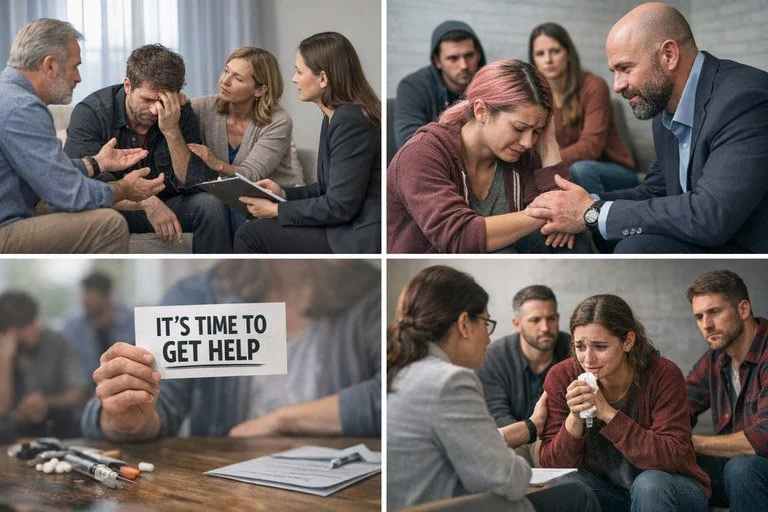
Myth #1: Interventions are angry confrontations meant to scare people straight.
Reality: Recovery Allies interventions are built on empathy and invitation. The goal is never to shame or frighten. It’s to help the person see that they are loved, supported, and worth fighting for — and that help is available right now.
Myth #2: Interventions only work for severe substance use disorders.
Reality: Interventions are equally effective for mental health challenges including depression, anxiety, bipolar disorder, PTSD, personality disorders, trauma-related issues, and co-occurring conditions. Recovery Allies regularly facilitates interventions for individuals struggling with mental health alone or in combination with substance use.
Myth #3: Once the intervention ends, the family is left to figure out the rest.
Reality: The intervention is only the beginning. Recovery Allies builds a comprehensive aftercare plan immediately, connecting the individual to ongoing services that keep momentum going.
The Recovery Allies Intervention Process — Step by Step
1. Assessment & Planning
A trained interventionist works closely with the family to understand the full picture — history, current struggles, previous treatment attempts, and family dynamics.
2. Preparation Meetings
Family members and loved ones learn how to communicate effectively, prepare letters of love and concern, and practice expressing support rather than blame.
3. The Invitational Gathering
The person of concern is invited (never ambushed) to join respectful, structured conversations. Everyone shares from the heart, focusing on specific examples of love and concern.
4. Presentation of the Plan
A clear, compassionate treatment recommendation is offered — not as an ultimatum, but as a loving invitation to begin healing with immediate support in place.
5. Immediate Transition
If the person accepts (which happens far more often with this invitational model), the Recovery Allies team handles safe passage to treatment, ensuring dignity and comfort every step of the way.
Throughout the entire process, the tone remains kind, hopeful, and focused on healing.
Interventions Work for Substance Use AND Mental Health

Many families don’t realize that interventions are just as powerful for mental health conditions as they are for addiction. Someone spiraling with untreated depression, severe anxiety, PTSD, or bipolar disorder, often resists help for the same reasons someone with substance use does — denial, fear, stigma, or feeling overwhelmed.
Recovery Allies’ adaptive model meets the person exactly where they are, whether the primary issue is substance use, mental health, or both. The same compassionate framework applies: respectful dialogue, unified family support, and a clear path forward.
What Happens After the Intervention? Continued Support Every Step of the Way
An intervention is never a “one-and-done” event. Recovery Allies immediately layers on additional concierge services to maintain momentum and prevent early relapse or dropout:
- Case Management — Coordinates all care, builds a full treatment team, and serves as the central point of communication.
- Recovery Companion — Provides 24/7 hands-on support during transition, travel, or daily life to reinforce accountability and skills.
- Mentoring — Offers daily check-ins, life skills coaching, and goal setting for long-term stability.
- Treatment Planning & Safe Passage — Ensures seamless admission to the right program and safe transport.
- Crisis Management & UA Program — Provides rapid response and ongoing accountability when needed.
This continuum of care is what turns a successful intervention into lasting recovery. Families no longer feel alone — they have an entire professional team guiding them every step of the way.
Why This Compassionate Approach Actually Works

Research and real-world outcomes show that invitational, family-involved interventions dramatically increase the likelihood that someone will enter and complete treatment. When people feel loved instead of attacked, resistance drops. When they see a clear plan and immediate support instead of vague promises, hope replaces fear.
At Recovery Allies, every interventionist is background-checked, trained, certified, insured, and supervised. Many have lived experience, giving them unique insight into both the clinical and emotional sides of recovery. The result is an intervention that honors dignity, preserves relationships, and sets the foundation for true healing.
You Don’t Have to Wait for Rock Bottom
If you’re reading this and thinking, “This sounds like my loved one,” please know that you don’t have to wait until things get worse. Early, compassionate intervention can prevent years of pain — for them and for everyone who loves them.
Recovery Allies has been providing these life-changing services since 2011, with the highest standards of ethics, professionalism, and discretion.
Start the path to healing.
Recovery Allies — Guiding You Every Step of the Way.
Reach out today for a free, confidential consultation. Our team will listen without judgment, answer every question, and help you determine whether an invitational intervention is the right next step for your family.
Contact us at:
📧 contact@recoveryallies.com
One compassionate conversation can change everything. Let us help you create the loving invitation that finally opens the door to healing. Your family’s journey toward recovery starts here — and we are ready to walk it with you.