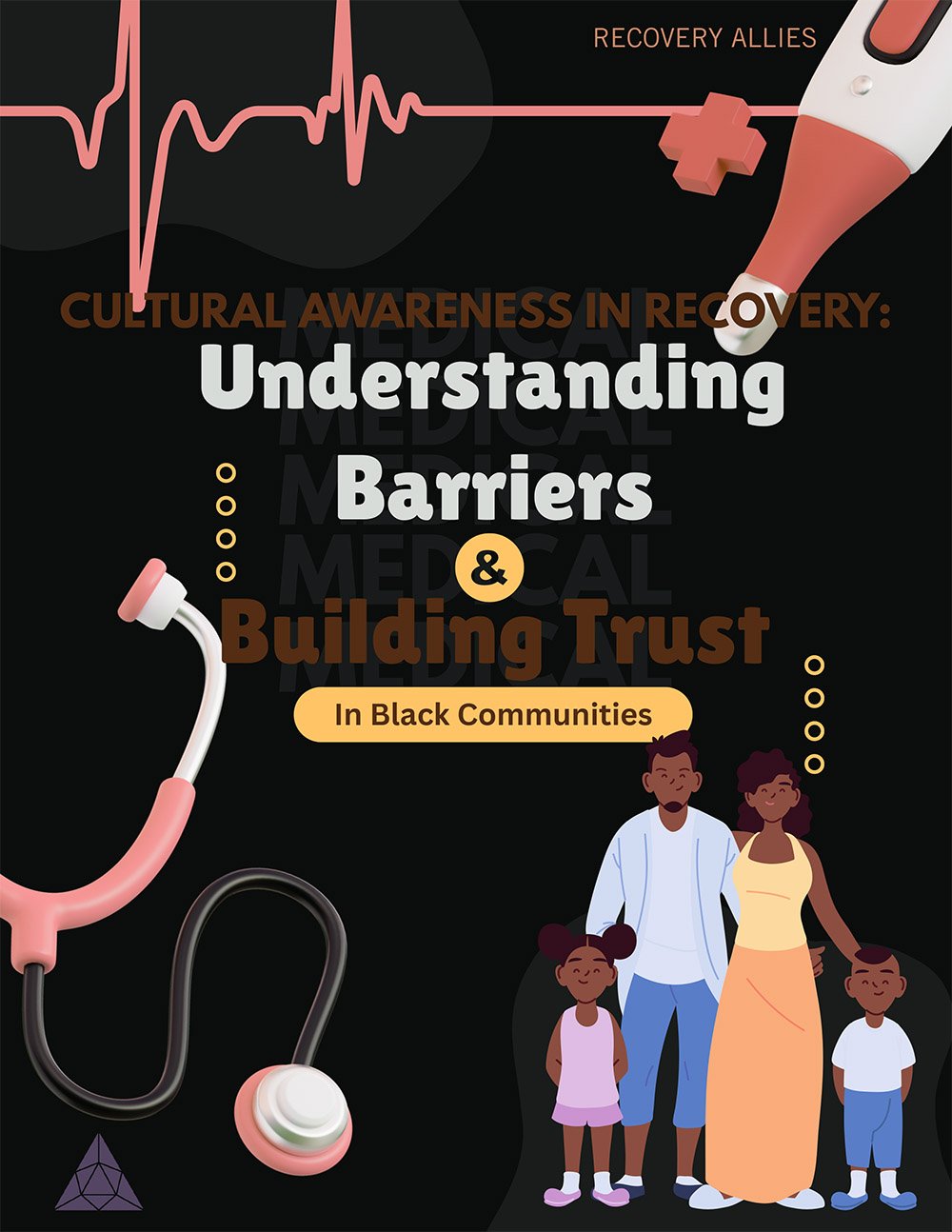
Cultural Awareness in Recovery: Understanding Barriers and Building Trust in Black Communities
At Recovery Allies, we believe culturally responsive care is not optional — it is essential for effective, compassionate recovery from substance use disorders and mental health challenges. Culture, history, and lived experience shape how individuals perceive mental health, seek help, and engage in treatment. Nowhere is this more critical than in supporting Black individuals and families, where systemic barriers and historical trauma have created deep and persistent disparities.
The Reality of Mental Health in Black Communities
- Approximately 13-16% of Black adults experience serious mental illness each year.
- Black individuals are about 20% less likely to receive mental health care compared to White individuals.
- Only 7.4% of Black adults with mental health conditions receive treatment.
- 63% of Black adults view seeking mental health treatment as a sign of weakness.
These gaps are not simply about access — they are rooted in historical and ongoing challenges including socioeconomic disparities, stigma, underrepresentation in the mental health field, and a long legacy of medical mistrust.
The Tuskegee Syphilis Study (1932–1972) remains one of the most painful examples. For 40 years, treatment (including penicillin after 1947) was deliberately withheld from hundreds of Black men, ending only after a whistleblower exposed it. This was followed by other instances of exploitation, such as the non-consensual use of Henrietta Lacks’ cells in 1951. These events, combined with documented disparities in pain treatment and “white coat trauma” — the deep mistrust stemming from healthcare institutional betrayal — continue to impact how many Black Americans engage with medical and behavioral health systems today.
Bias in healthcare can lead to Black clients’ distress being misinterpreted as aggression or “drug-seeking” behavior rather than genuine suffering. This contributes to over-diagnosis of certain conditions, under-treatment of others, and avoidance of care.
Recovery Allies’ Commitment to Culturally Aware Care
We recognize that standard approaches often fail when they ignore these realities. That’s why our Concierge Recovery Services are intentionally tailored to each client’s unique cultural background, values, and experiences.
Our mentors, recovery companions, and case managers take time to understand the specific cultural context of every individual and family we serve. We create safe, non-judgmental spaces that honor resilience, community strength, and the adaptive nature of guardedness developed from repeated institutional betrayal. Our team works to rebuild trust through consistency, transparency, and genuine cultural humility.
By integrating cultural awareness into every aspect of care — from family dynamics and communication styles to spirituality and community connection — we help clients feel truly seen. This personalized approach improves engagement, reduces shame, and supports deeper, more sustainable healing for both individuals and their loved ones.
Recovery is not one-size-fits-all. True healing requires understanding where someone comes from and meeting them there with respect and compassion.
If you or a loved one are navigating recovery and want care that honors your full story, Recovery Allies is here. We provide concierge-level support designed for real people with real histories — because everyone deserves recovery that feels culturally relevant and genuinely supportive.
Contact us today to learn more about our culturally responsive mentoring, recovery companion, and family support services.
Reach out today for a free, confidential consultation:
📧 contact@recoveryallies.com
📞 800-318-0996
Recovery Allies – Personalized. Culturally Responsive. Whole-Person Healing.