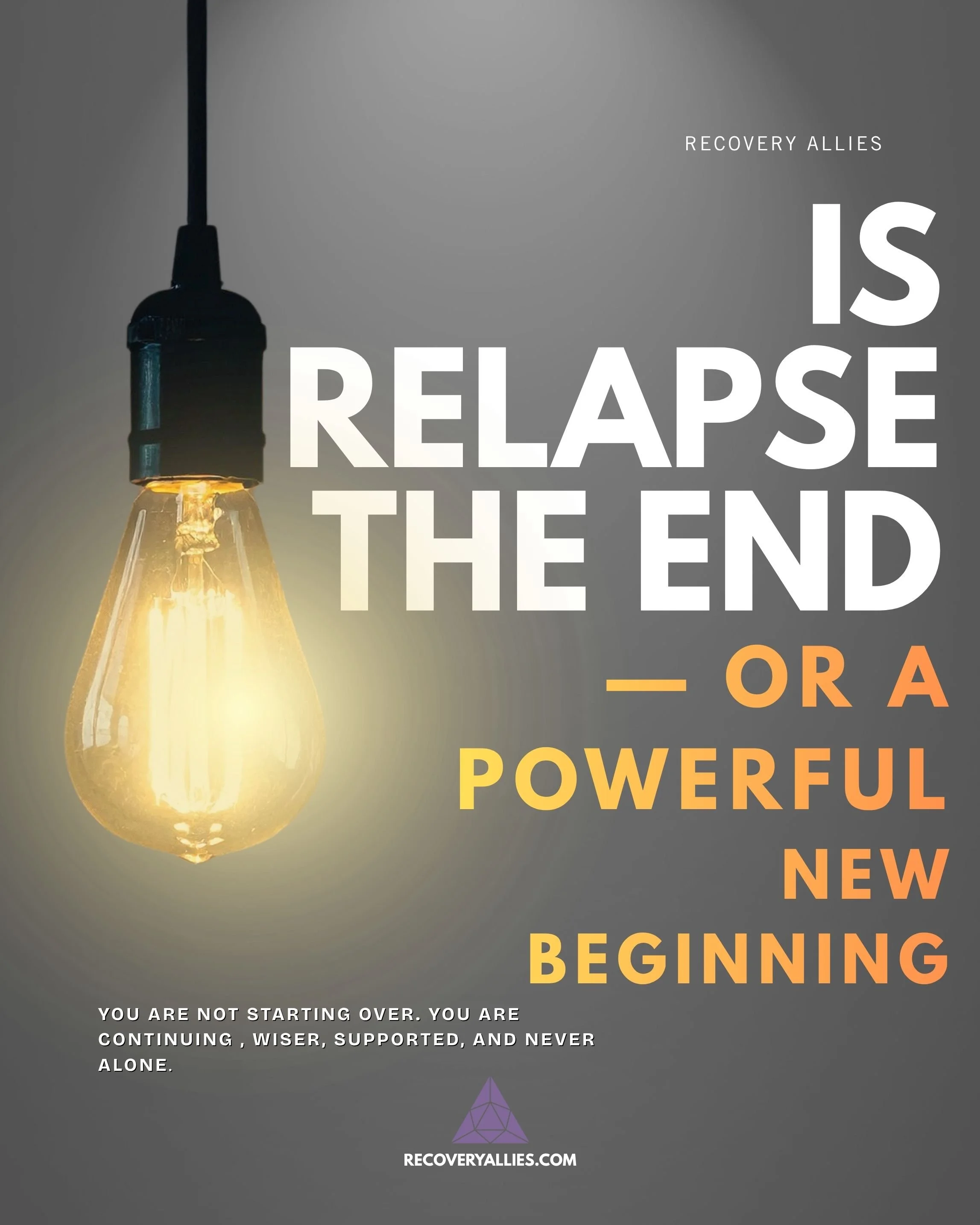
Is Relapse the End — or a Powerful New Beginning?
Relapse doesn’t erase your progress — it illuminates where you need the most support.
Relapse is one of the most misunderstood parts of recovery. Far too often, individuals view it as personal failure rather than a common, treatable part of the healing process. In truth, relapse — whether in substance use or mental health — is frequently a turning point that provides valuable information about what needs strengthening in your recovery plan.
Substance Use Relapses are especially common in early recovery. Research from the National Institute on Drug Abuse (NIDA) shows that 40-60% of individuals with substance use disorders experience at least one relapse during recovery. These episodes often occur when triggers (environmental cues, stress, people, or places associated with past use) combine with insufficient coping skills, disrupted routines, or unaddressed emotional distress. A person might feel an intense craving, act on it impulsively, and then spiral into shame, guilt, and fear of judgment. Physiologically, the brain’s reward system — altered by repeated substance use — can make cravings feel overwhelming, as noted in studies on dopamine dysregulation.
Mental Health Relapses follow a similar pattern but manifest differently. According to the American Psychological Association, up to 50% of individuals with major depression or anxiety disorders experience symptom recurrence within the first year after improvement. These relapses can involve returning depressive episodes, heightened anxiety, disordered eating patterns, or intrusive thoughts after a period of stability. They are often preceded by life transitions, family conflict, sleep disruption, or the gradual erosion of self-care practices. The emotional aftermath frequently includes feelings of hopelessness, self-blame, and isolation.
What usually precedes any relapse? Warning signs such as social withdrawal, skipping support meetings or appointments, increased negative self-talk, poor sleep, or avoidance of healthy routines. Afterward, many people feel profound shame and fear, which can delay reaching out for help.
At Recovery Allies, there is no shame or judgment — only compassion and expert support. We understand that relapse is part of the journey for many. Our concierge services begin with a thorough assessment of your current needs, quickly assembling a specialized team around you. This may include dedicated Case Management for daily structure, Crisis Case Management for immediate stabilization, experienced Mentors for accountability, or Recovery Companions for intensive, around-the-clock support.
Our goal is simple: help you learn from the experience, strengthen your foundation, and return to your path with greater insight and resilience. Recovery is not linear — it’s a process of continual growth. Every step, even the difficult ones, brings you closer to lasting wellness.
You are not starting over. You are continuing — wiser, supported, and never alone.
Ready to take the next step?
💜 Visit us at recoveryallies.com
📞 Call (206) 295-8423
✉️ Email contact@recoveryallies.com